Innovation doesn’t just mean building the latest and greatest technology. It’s also about building the community to go alongside it.
Technology evolves and grows, but the underlying community that’s established informs how that happens.
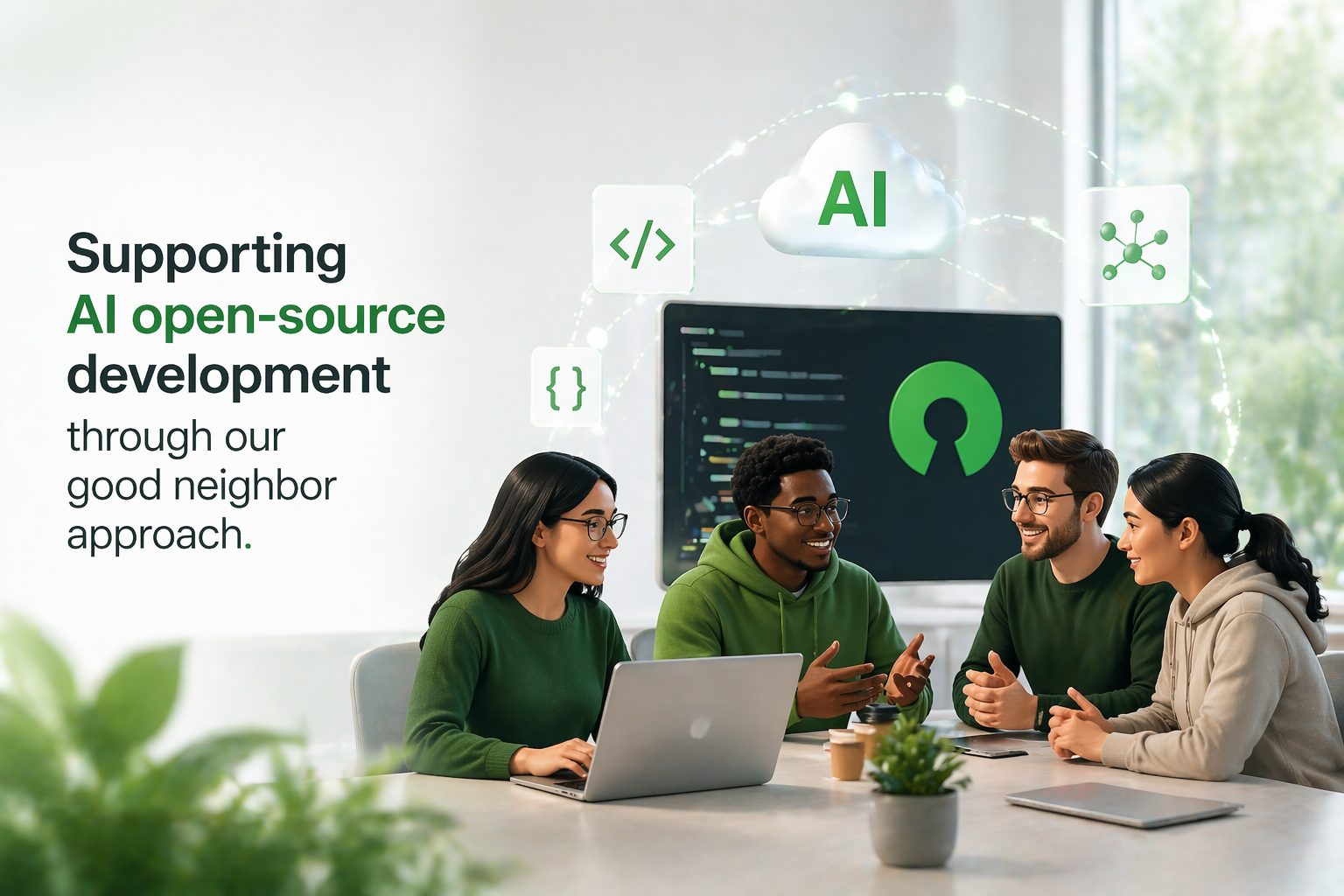
It’s why, as AI grows as a field, TD has prioritized and invested in engaging with and building up the broader tech community.
“It’s about being a good neighbor,” says Mark Paulsen. The Head of TD’s Open Source Program Office, Paulsen likes to think of engaging with technological peers in local, and helpful terms.
“Maybe someone needs some sugar or flour, or maybe we can work together to improve the neighborhood,” he suggests.
This neighborly approach has a significant impact when it’s focused on supporting the continued evolution of AI and other tech innovation.
“It’s about engaging with the community. Speaking at conferences, being members of organizations, submitting research papers and sharing support where it’s needed.”
Describing TD’s open-source philosophy, Paulsen goes on to quote Linux Foundation Advising Chief Economist Frank Nagle, who wrote in the Harvard Business Review that with emerging digital technologies, the best approach is for companies to “collaborate on the core, compete on the edges.”
This philosophy of collaborating on the core is why TD is now a proud member of the Linux Foundation and the FINOS Foundation.
As the Linux Foundation’s Hilary Carter and Anna Hermansen put it in a report released February, open-source AI approaches allow “researchers, companies, and governments to localize solutions, safeguard privacy, and democratize innovation, and do so in a more sustainable fashion.”
It’s also why TD shares knowledge with and learns from peers at conferences, whether it’s the Open Source Summit, or Open Source in Finance Forums.
In this spirit, TD joined the next era of open source patent defense through the Open Invention Network 2.0, including a seat on the OIN Technical Advisory Committee.
Through OIN 2.0, the bank is part of the largest active patent cross license in history. In parallel with the launch of OIN 2.0 in January, OIN released Linux System Table 13, an update to OIN’s patent protection coverage. It covers 650 new open source software packages and increases coverage for cloud computing, including Kubernetes and Eclipse.
“We’re proud to join OIN 2.0 and to play a leading role in the new industry standard to protect AI open source,” said Vlad Shpilsky, Head of Global Technology & Solutions at TD.
“Leaning into collaboration is not only a best practice, but it’s also a more human way to establish AI standards and build solutions.”
Paulsen explains this collaborative approach is also good business.
He points out that engaging with the open source community is appealing to the bank’s workforce of developers who welcome the opportunity to share information, collaborate, and build. And increasingly there’s work being done on developing the ROI case at companies for why open source is beneficial for both the company and the broader community.
Paulsen says that patents still play a role in those edges where companies compete. Driven by TD Invent, the strategic umbrella effort to power purposeful innovation at the Bank, TD is the company with the second-most patents in Canada and the fifth-most AI-related patents among financial institutions globally, according to a November 2025 Evident AI report.
But while many banks may think globally, he also encourages them to act locally.
“All companies need the space to manage their own house,” Paulsen said, referring to where they compete.
But he expressed pride in helping to build out the growing AI ecosystem.
“No one regrets being a good neighbor. It’s good for the whole community.”